
In this article
This week marks two years since I first started working with HiTZ Cricket.
At the time, HiTZ Cricket was essentially lived on a PowerPoint idea and some initial seed money.
I worked with the founder Dominic Reed and the forming Board and management team to help turn that idea into a brand and customer proposition we thought could work. But I was also pretty skeptical about how quickly it could scale.
The initial capital would realistically have funded one, perhaps two, venues. However good the concept looked, at some point someone actually had to build the thing.
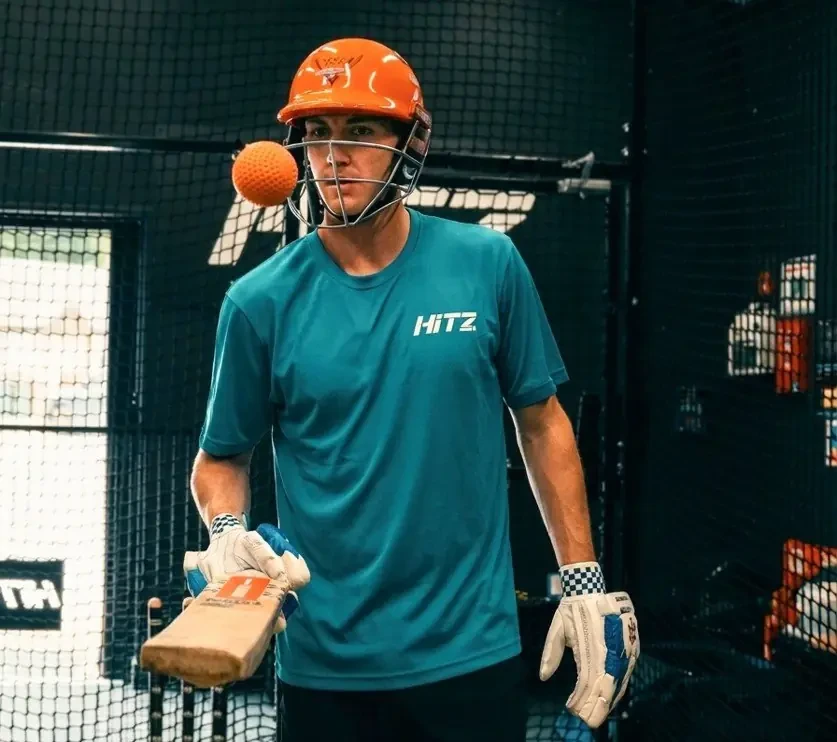
Two years later, HiTZ has 15 venues including Australia, more than 20,000 customers have played, Harry Brook is an ambassador, there is a new digital app just launched, with new participation products being developed (5-a side cricket coming this Autumn) and the business is exploring opportunities in other cricket markets.
It has been quite a journey to watch and help shape from close up. And when I think back to those first conversations, one thing stands out.
The idea was much bigger than the operation.
That is probably true of most startups. But it is very different from most of my previous career.
At P&G, the FA or ECB, a new idea already sat inside an organisation with people, money, infrastructure, expertise, processes, data and distribution. The challenge was often getting the organisation behind the idea.
In a startup, you are trying to prove the idea while simultaneously building the organisation capable of delivering it. I have subsequently experienced different versions of that through my involvement with Maiden Cricket and a immersive football experience which will launch next year.
And I went into all of this assuming most of the learning would flow one way. After 20+ years around brands, consumers, commercial strategy and sport, surely my value was bringing some big-company experience into smaller businesses?
Some of it was.
But two years into the HiTZ journey, these businesses have changed quite a lot about how I think too.
And particularly about some of the behaviours that established brands and rights holders around sport might want to rediscover.
1. Don't let today's resources define tomorrow's opportunity
My original scepticism about HiTZ was rational.
If each venue required capital and there was only enough central capital for one or two venues, there was an obvious ceiling on growth.
Except we changed the model.
As we started taking HiTZ to market, we found ways of raising capital at individual site level rather than requiring everything to be funded centrally.
One or two potential venues became five. Then ten. The constraint had not disappeared. We had changed the way we thought about solving it.
That has been one of the biggest adjustments for me.
In corporate life, there is normally a moment each year when budgets get agreed. You make your case, pump up the tyres in some areas to make sure you have at least something to try something new with but ultimately you are asking yourself this question:
What can we do with the money we have got?
Startup life has made me ask the question the other way around:
If this is worth doing, how could we find the resources to do it?
And resources do not only mean money. We are currently developing HiTZ Compete (the 5-a side cricket competition) for example, working with Wisden as both our media partner and supporting our engagement with Brand partners. Not only would a brand gets access to an innovative participation proposition, but also an established cricket media platform capable of providing storytelling, content and reach.
HiTZ does not need to build a media business. Wisden does not need to build a participation network. Together, you can potentially create something more valuable.
Interestingly, this is not exclusively a startup behaviour.
At the FA, I created the FA People's Cup using a similar approach. (props to Sharon Fuller and Pete Ackerley who were driving forces)
The BBC helped promote it. Powerleague and Goals provided facilities. The FA governed and administered the competition and managed the digital capture. We did not need to own everything.
Looking back, perhaps we were behaving a little like a startup and with just under 50,000 participants and a 5-year tenure I’d say that was a pretty decent result.
It leaves me wondering how often established organisations inadvertently allow the resources they control to determine the size of the ideas they pursue.
And how many potentially valuable projects around sport die with: "We don't have the budget."
Rather than: "Who else might want to help us make this happen?"
2. Progress can be imperfect
Startups are supposed to be brilliant at moving quickly. The reality is slightly messier especially when sometimes you have make decisions because they are the decisions you can afford to make.
We have invested in things at HiTZ knowing there is a reasonable chance we will have to replace or significantly upgrade them within six or twelve months – that’s been frustrating and can be (and feel) inefficient
But I have also started looking at the alternative.
Startups sometimes accept the cost of doing something twice. Bigger organisations can accept the much greater cost of waiting until they can do it once.
The new HiTZ app is a good example of where speed has worked in our favour.
We decided that extending the experience beyond the physical session (including things like player videos and stats) was going to be an important part of the proposition and that we wanted to control that experience.
Then we found the right partner and got on with building it.
In a large organisation I have spent considerably longer evaluating “build versus buy”, integrations, future use cases, stakeholders and the long-term technology ecosystem - all sensible questions.
But I have become much more conscious of separating the important strategic decision from all the implementation decisions surrounding it. Sometimes we try to answer every possible question before we are prepared to answer the most important one.
It has also made me rethink what we call innovation.
Lots of organisations have innovation funds, pilots and trials. But how many involve things where we genuinely do not know whether they will work?
If I went back into a big rights holder tomorrow, I would want a small pot of money specifically for things that might fail – actual proper experiments. Not because failure is clever but because an organisation where every new idea has to prove its likely return before being allowed to start will inevitably eliminate some of the ideas with the biggest potential.
3. The market does not care how much you like your strategy
This has probably been the more uncomfortable lesson personally.
I have spent enough time around brands, consumers, sport and sponsorship to form a hypothesis reasonably quickly:
This is a good proposition. This is who it is for. These brands should want to be involved.
That is useful, until the market disagrees.
Maiden Cricket has been a good example; The founding story is incredibly powerful: two teenage girls frustrated that cricket kit and equipment was not properly designed for them decided to do something about it. The founders are not a marketing construct. They are living the consumer problem the business exists to solve.
I thought the strength of that story, the proposition and some of my own relationships would unlock brand support relatively early but it proved much harder than I expected.
Brands liked it. They understood the problem. They could see the potential alignment. But repeatedly we ran into questions of scale, budgets and commercial readiness.
And yet fast-forward and Maiden's appearance on Dragons' Den has generated extraordinary attention. Nicole Muller and Oliver Black doing amazing things...
My own post about their appearance became one of the most-read things I have ever published on LinkedIn.
It illustrates an interesting distinction and maybe some of those brands might have engaged differently if they had their time again?
Sometimes the idea can have more scale than the operation.
That is worth thinking about for brands. Reach today obviously matters but audience scale and idea momentum are not necessarily the same thing.
If brands only back things once they have achieved proven scale, they potentially miss the opportunity to have genuinely contributed to creating that scale - and the advocacy and ownership that can come with it.
Perhaps we need to distinguish more clearly between conventional sponsorship and growth partnerships.
Do not just sponsor success. Sometimes help create it.
The Maiden experience challenged me too as sometimes experience can create its own echo chamber. You keep pushing because you are convinced something should work and in hindsight I have become more willing to ask:
Where are we actually getting traction?
I have seen another version with the immersive football experience I have been supporting with Stuart Rowson.
The proposition was well received from the outset, but finding a scalable home for it within existing infrastructure proved difficult.
Eventually you have to stop asking how you can persuade the market harder and ask:
Can the business model remove the barrier instead?
That is increasingly shaped how that proposition has evolved.
Sometimes the market is telling you the idea is wrong. Sometimes it is telling you the route to market is wrong and you need to be prepared to hear either answer matters.
4. Strategy is actually the easy bit
This might be the lesson I least expected. I have spent a large part of my career developing strategies And startups can develop perfectly good ones too.
The harder part is making them happen.
In a big organisation, once a strategic direction is agreed there are normally teams, budgets, agencies, processes and operating rhythms that can help translate thinking into doing.
Those things can feel bureaucratic when you are inside them but you appreciate them rather more when they are not there.
In a small business, the same people responsible for delivering the future are also responsible for keeping today running.
Customers need serving. Venues need operating. Suppliers need managing. Money needs raising. Problems need fixing.
Then somebody remembers the strategic project everyone agreed was important three months ago.
The day job fights the change agenda every day.
It has made me appreciate that implementation capacity needs to be designed just as deliberately as strategy.
Who owns it? What resource does it have? What stops so this can start? How will we know whether it is happening?
This is not only a startup problem.
I have probably sat in plenty of corporate strategy sessions where we have confused agreeing something with actually resourcing the change required to deliver it. Startups just make the gap much harder to hide.
And ultimately, I have learned to bet on people
There is one thing above everything else that has changed how I assess early-stage opportunities - I look much harder at the people.
I have engaged with a number of startups over the last couple of years. Some relationships have grown and others have not and when they have not, it generally has not been because I suddenly decided the original idea was terrible.
Often it has been about execution.
I have invested time and energy into propositions I still believe had potential, but where the people involved were not ultimately capable of turning that potential into the business it needed to become and I have had my fingers burnt a little as a result.
So now I am assessing two things simultaneously:
How good is the idea?
And how good are the people who have to make it real?
The strongest founders I have worked with actually share many characteristics with the best corporate leaders I have experienced - They are driven. They work incredibly hard. They communicate. They motivate people. And they are prepared to make decisions.
What feels different is proximity.
In a startup, the CEO might be discussing investment in the morning and helping solve a customer problem in the afternoon and of course there are fewer layers between leadership, delivery and the customer.
Ironically, I have access to less sophisticated customer research in some of these businesses than I did during corporate life.
Yet in some ways I have never felt closer to the customer.
You are hearing the complaint. The venue issue. The supplier problem. The product feedback. The commercial opportunity. It can feel messy at times but it informs your thinking in a way another dashboard sometimes cannot.
Of course, that creates another challenge as startups scale. A founder being involved in every important decision can be an enormous advantage when there are five people but at 50, it can become the constraint.
Eventually the founder has to scale themselves too.
So, should big sport behave like a startup?
No - that conclusion is too easy.
Startups would love many of the things established organisations have: Capital, People, Data, Specialists, Infrastructure, Processes, Credibility. The ability to build something properly rather than knowingly replace it next year.
But after two years watching an idea on a PowerPoint turn into a real operating business, I do think there is something established organisations can learn.
If I walked back into a big rights holder tomorrow, I would probably do three things differently.
- I would create room for genuine experimentation - including things where failure was an acceptable outcome.
- I would work harder to remain close to the messy reality of the customer and the wider organisation, rather than allowing organisational structure and dashboards to create distance.
- And I would ask much more often whether an idea genuinely has to be constrained by the people, money and assets we currently control.
Because startups desperately want many of the things that scale eventually provides.
The interesting question is what organisations can lose while acquiring them: Curiosity, Proximity, Pragmatism, Experimentation, A willingness to make an imperfect start.
And the instinct, when the obvious route is not working, to find another one.
Maybe the opportunity is not for big sport to think like a startup.
It is to work out which startup behaviours it should not have grown out of.
First published on LinkedIn on 6 Sep 2026. Read the original
Russell James
Founder of Bazballers. Formerly Marketing Director at The FA, Sales and Marketing Director at the ECB, and ten years at P&G.
More about Russell